
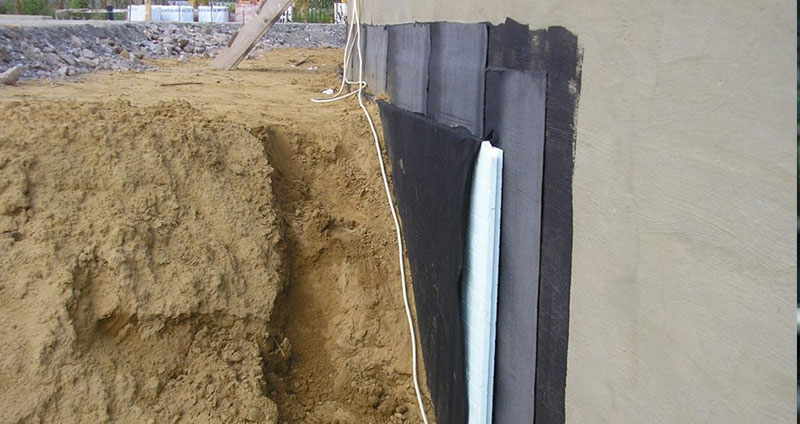
During our most recent Pre-Purchase Property Consultation, we encountered a very serious problem. The client asked us to inspect a semi-finished family home that they wanted to purchase and to be ruthlessly honest about any defects. They also wanted to know how much it would cost to fix these problems.
The first and most serious problem was that the builder had “forgotten” to install moisture barriers in the foundation. As a result, such an incredible amount of moisture had been absorbed into the main walls that it far exceeded health limits. Negligence? Cost-cutting? From the client’s perspective, it no longer mattered. The point was that this defect had severely damaged the house and would have made it uninhabitable if they hadn’t requested expert assistance before the purchase.
How Did We Notice the Problem?
When we first entered the building, we immediately noticed the characteristic musty smell. On the lower parts of the walls—especially around the corners—discoloration caused by moisture was clearly visible. Measurements taken with a moisture meter clearly showed that the moisture content of the masonry was many times higher than the acceptable level. During the inspection of the foundation, it became clear that no horizontal moisture barrier had been installed at all, so moisture from the ground was being absorbed into the masonry without any obstacle.
Unfortunately, this is not an isolated case. Over the years, we have encountered many similar situations where this step was “saved” during construction or simply not done properly. The problem only becomes apparent later, in many cases years after the construction is completed, when it already endangers the health of the residents.
What Happens If They “Save Money” on the Ground Moisture Barrier?
This is the point where “saving money” actually proves to be the most expensive decision. If the ground moisture barrier is missing or poorly executed, the consequences are incalculable.
Constant Moisture and Mold: The rooms will guaranteed have constant moisture and mold. This is not only ugly, but the apartment will have a constantly musty smell, which is extremely unpleasant. Mold first appears as small, barely noticeable spots in the corner, then gradually spreads. It is most commonly found on colder wall surfaces, around windows, and behind furniture, where air circulation is limited.
Health Risks: Moldy walls can be constantly repaired, but if the root of the problem (moisture) remains, it’s pointless. Mold is not just an aesthetic problem: it can cause serious health issues, such as respiratory diseases, allergies, asthma, and in more severe cases, even pneumonia or meningitis.
One of our previous clients contacted us because their family had been struggling with recurring health issues for months. The children developed persistent coughing and sleep disturbances, and one of them began experiencing allergy-like symptoms that no medication seemed to relieve.
When an environmental health specialist examined the home, the tests showed elevated mold spore levels in several rooms. The underlying cause turned out to be a severe moisture problem due to a missing ground moisture barrier.
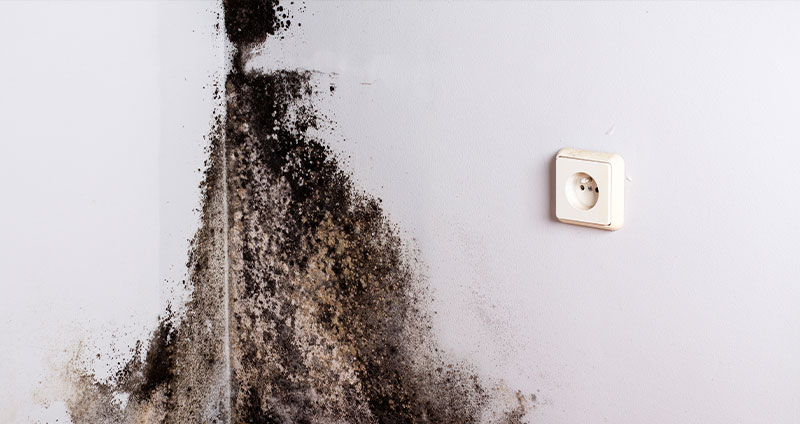
After the insulation was corrected and the damaged plaster was replaced with breathable materials, the indoor air quality gradually improved. Within a few months, the children’s symptoms disappeared completely, and the family finally experienced a healthy living environment again.
Structural Damage: Constant moisture causes not only health problems but also structural issues. The thermal insulation capacity of wet masonry deteriorates drastically, so heating costs increase significantly. In addition, the material of the bricks and blocks begins to deteriorate due to moisture, and reinforcing steel can corrode. In winter, when the moisture freezes in the masonry, freeze-thaw cycles damage the structure even faster.
Financial Damage and Loss of Value: Furniture, clothes, books, or anything close to the wall will also become moldy. This is not only annoying but also causes serious financial damage, as moldy items can become irreparable. Not to mention that the market value of a moldy, musty property drops drastically. According to the experience of real estate professionals, the value of a house with moisture problems can be 25-30% less (or much more) than a similar property without problems.
The greater the extent of the damage, the more expensive it is to eliminate the damage. In cases of severe damage, the property can even become worthless.
It is clear, therefore, that saving money on ground moisture barriers may seem like an “advantage” in the short term, but in the long term it means many times the cost and constant frustration.
How Can Missing or Faulty Insulation Be Recognized?
If you are buying a used property or moving into an inherited house, it’s worth paying attention to the warning signs:
- Musty, moldy smell in the rooms, especially in basement or ground floor areas
- Discoloration on the lower parts of walls, especially in corners
- Crumbling, peeling plaster, especially on the lower part of the wall
- White efflorescence (salt crystallization) on the wall surface, which remains after moisture evaporation
- Cold, damp-feeling walls, even in summer
- Higher heating costs than expected because wet masonry insulates poorly
If you notice any of these signs, it’s definitely worth calling in a specialist who can accurately determine the extent of the problem with a moisture meter.
Can the Foundation Be Insulated Afterwards?
Unfortunately, post-installation insulation is always a forced solution, and you have to dig very deep into your wallet. It is far more expensive and complicated than creating proper insulation during construction.
The two most commonly used methods for post-installation insulation are:
Injection Method:
During this process, the walls are drilled (not through their entire thickness, but to a certain depth—depending on the wall thickness), and a special chemical waterproofing material is injected into the holes. This material forms a waterproof layer in the masonry, preventing further moisture absorption. At the end of the process, the wall surfaces are often treated with drying plaster or breathable plaster (after complete removal of the old plaster), which helps ventilate the trapped moisture and dry the wall.
The injection process typically involves creating drill holes at 10-15 cm intervals and injecting the waterproofing material under pressure. After the intervention, the waiting period can last several months until the masonry is completely dry. During this time, increased ventilation is required. The drying process can be accelerated by using dehumidifiers.
Metal Sheet Pressing:
There is also the metal sheet pressing method, where special metal sheets are pressed into the masonry. It’s important to know that not every type of masonry is suitable for this method. Its implementation is more complex and requires special equipment. This solution works well primarily with brick masonry; it often cannot be applied to mixed or block masonry.
The wall is cut horizontally in sections through its entire thickness, and special metal sheets are pressed into it. This solution is not optimal because the complete cutting also reduces the stability of the masonry.
Costs and Time Requirements
The cost of post-installation insulation is typically several times higher than what proper execution during construction would have required.
For an average family home in the European Union, the injection method usually costs €4,000–€6,000, depending on the length and thickness of the masonry.
This is followed by:
- complete removal of moldy plaster
- chemical treatment of the wall surface
- re-plastering with breathable or drying plaster
- and in many cases, partial interior renovation
Both methods require serious expertise, and the final cost depends heavily on the masonry type, wall thickness, and the severity of the moisture damage.
What Type of Ground Moisture Barrier Should You Choose?
When you are still in the early stages of construction or renovation and ground moisture barriers can still be implemented “in time,” you can choose from much simpler and more cost-effective solutions.
Liquid Waterproofing Materials:
One of the most frequently recommended solutions is the use of liquid waterproofing materials. These are extremely versatile and can be easily applied to the foundation—even with a simple paint roller. Their advantage is that they are flexible and have good adhesion, so they effectively block moisture.
Liquid bituminous and synthetic resin-based insulations are particularly popular. It’s important that they be applied in at least two layers, lengthwise and crosswise, thus ensuring complete coverage. Between individual layers, drying time must be allowed, which can be 4-24 hours depending on the weather and product type.
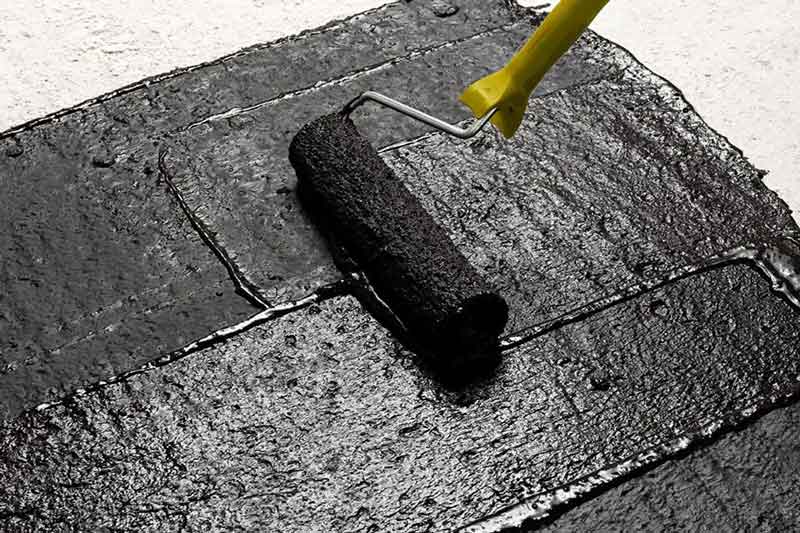
photo by: Dekorizon
Sheet Insulation:
However, excellent sheet waterproofing materials can also be purchased, which provide durable and reliable protection. Alongside bituminous sheets, newer polymer-based solutions are becoming increasingly popular. However, for the proper installation of these waterproofing materials, it’s definitely worth seeking the help of a specialist.
It’s advisable to use thick bituminous sheets with fiberglass reinforcement, but the same can also be applied with a metal sheet insert based on specific needs.
Sheet insulation must always be laid with overlaps, and the seams must be carefully welded or glued together. The most common mistake is that the overlaps are not wide enough (they must be at least 10 cm), or proper attention is not paid to the corners during execution. Improper installation can lead to serious problems, which will later cause much greater expense and frustration than what we would have saved on the specialist’s fee.
What Should You Know When Building or Renovating?
If someone is planning construction or major renovation now, here are a few important pieces of advice:
- Don’t skimp on insulation! This is not the point where it’s worth reducing costs.
- Check the work! Even if you trust the contractor, an independent expert’s opinion can be worth a lot.
- Ask for a guarantee! It’s definitely worth getting a written guarantee for waterproofing work.
- Document the process! It’s worth taking photos of the completed insulation before it’s covered. This can be very useful later.
Summary
Ground moisture barriers are not an optional luxury but the building’s basic protection and a guarantee of the health of those living in it. Such a “neglected” element can have serious consequences that are both financially and health-wise burdensome.
A few thousand euros invested during construction can save tens of thousands of euros in later repair costs — not to mention the health risks and the long-term deterioration of the property’s value. Ground moisture barriers are therefore not an expense but an investment in the building’s structural integrity and the residents’ well-being.
This is why we always emphasize the importance of Pre-Purchase Property Consultation. With a thorough technical survey, such hidden defects can be avoided, and property purchase remains a truly joyful event. And if you’re buying a newly built house, don’t be afraid to ask about insulation, request documentation, and if necessary, ask for an independent expert opinion as well. This small caution can protect you from decades of problems.
Discover more tips and ideas on our Pinterest page
Hi, this is a comment.
To get started with moderating, editing, and deleting comments, please visit the Comments screen in the dashboard.
Commenter avatars come from Gravatar.