

Building or renovating a house is always a milestone. It’s the moment a dream takes shape: a place that is truly yours, chosen and designed by you, soon to be filled with life. The excitement of the first sketches, Pinterest inspirations, material samples, and color palettes can be overwhelming. In the midst of this creative whirlwind, it is easy to overlook a less romantic but absolutely vital player: the construction budget.
This document is rarely the star of family dinners or the subject of trending social media posts. Yet, it is the invisible map that serves as your project’s compass—and in its absence, the primary cause of failure.
The Construction Budget: Your Behind-the-Scenes Guide
If you have ever built a home or even considered it, you have likely heard someone say: “A house like this costs about €350,000–€400,000.” That sounds straightforward, but what exactly does that cover? The shell? The roof? The HVAC systems, the tiling, or the landscaping? This is where misunderstandings begin.
A proper budget doesn’t just give you a total figure; it provides a precise breakdown. It lists exactly what work needs to be done, which materials will be used, what technologies will be applied, and exactly how much each item costs—including both material and labor.
For instance, when tiling a bathroom, a professional budget won’t just say “tiling.” It will specify the square meters, the type of tile, the specific adhesive and grout, and how the surface will be prepared. These details determine how long the work will last, how comfortable the space will be, and ultimately, the final price.
What Is a Budget Based On?
A budget is not a shot-in-the-dark prediction. For new builds, the foundation is the execution plan derived from the legally approved permits. In the case of renovations, an on-site survey is often required to record the existing technical conditions. Based on this data, a specialist prepares the budget—someone who doesn’t just design, but calculates, anticipates challenges, and knows exactly what resources will be required.

What Happens Without a Budget?
We often see construction sites that remain half-finished. The walls are up, but there is no roof. Or the roof is on, but there is no heating system. The owner has run out of funds or is exhausted by constant disputes and modifications. An increasing number of projects face unforeseen costs simply because no preliminary budget was created.
This is why banks require a detailed budget before approving a construction loan. They want to know exactly where the money is going, the split between material and labor costs, and the size of the contingency reserve needed if things change.
Compromises often stem from a lack of planning. Without a prior roadmap, you might discover mid-way that your chosen tiles no longer fit the remaining funds, there’s nothing left for the flooring, or you have to settle for lower-quality insulation than you originally wanted. A good budget is more than a document—it is an early guarantee that you will cross the finish line and your dream will become a reality.
Priced vs. Unpriced Budgets: What’s the Difference?
There are two key terms every homeowner should know: the unpriced and the priced budget.
The Unpriced Budget – Your Starting Point This version contains no prices. It describes, line by line, every task to be performed, the materials required, and the technology to be used. This is the document you give to several contractors so they can provide quotes based on the exact same criteria.
Imagine asking three different bakeries to bake you a cake. If you don’t specify the ingredients, size, and decoration, one might offer a simple sponge cake while another offers a multi-tiered fruit cake. You wouldn’t be able to compare the prices fairly. An unpriced budget provides the “recipe” that all contractors must follow, making their offers truly comparable.
The Priced Budget – When the Numbers Come to Life The priced budget follows, containing the actual costs. This can be filled out by a specific contractor or created by comparing quotes from several firms. A well-prepared priced budget includes unit prices, totals based on quantities, and a clear distinction between labor and materials. This becomes the basis of your contract and the guiding light for the project’s financial management.
The Importance of “Identical Technical Content”
Many people still focus only on the bottom line. However, if two quotes use different technologies, materials, or quantities, the “cheaper” one on paper might actually result in lower quality or incomplete work.
Example: If one quote for bathroom tiling is €65/m² and another is €52/m², the cheaper option seems obvious. But if you look at the technical details, the cheaper one might use a basic cement-based adhesive, while the other includes a high-quality flexible (S1 or S2 class) adhesive. Flexible adhesive is essential for longevity, especially with underfloor heating or larger tiles. One quote might ignore waterproofing (tanking), while the other includes it as standard. In the end, the “expensive” quote is actually the better investment—it’s more durable and requires less maintenance.
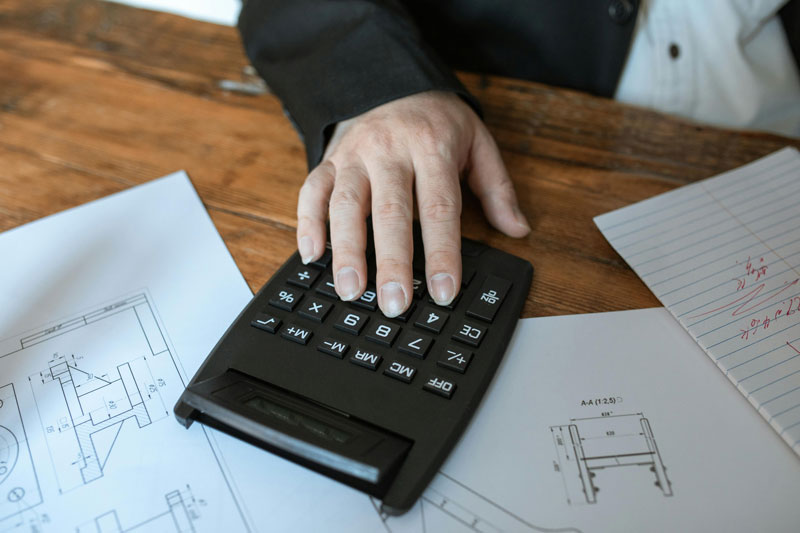
This is why it is vital to define every item precisely and compare quotes based on identical technical content. Furthermore, always ask for references to see if a contractor actually stuck to the agreed technical standards on previous projects.
A Cautionary Tale: Peter and the “Crying” Log House
Peter had long dreamed of a log house—a natural home made of wood, with warm tones and creaking floors. He planned to build in two phases: first the concrete foundation, then the wooden structure.
He requested quotes from several companies and, like many, focused on the price. He chose the cheapest contractor because their technical description seemed identical to the more expensive ones. The contractor confidently claimed that since the foundation was already done, no further damp-proofing was needed. Peter was relieved: “At least we can save some money here,” he thought.
The project moved quickly. Within weeks, the structure was up, and Peter’s family moved in. The house was beautiful. But the joy was short-lived. As the autumn rains arrived and humidity rose, strange damp patches appeared on the timber joints. The wood began to “cry,” and mold-like discolorations spread across the surfaces. A specialist was called in, and the diagnosis was devastating: Dry Rot (Serpula lacrimans) had infested the building.
The Price of Choice: What Went Wrong? Peter’s mistake wasn’t choosing a log house. It wasn’t even his lack of technical knowledge—he shouldn’t have had to be an expert. His mistake was not having an unpriced construction budget and not hiring a technical supervisor (owner’s representative).
He chose from contractor quotes that were not technically identical. One company had factored in professional wood preservation and moisture barriers; the other hadn’t. On paper, the cheaper quote looked like a win, but it lacked the two crucial elements that would have protected his home from fungal decay.
Dry rot is one of the most aggressive wood-destroying fungi. Its spores travel through the air, and if the environment is damp and the wood is untreated, it is almost unstoppable. Peter’s dream home—the one he saved for years to build—was infected within months. Beams had to be replaced, and the house required intensive chemical treatment and restoration. The cost was several times what he had “saved” on the initial quote.
This story shows that a construction budget is far more than a list of numbers – it’s the guardian of your dreams. It helps you see what you’re getting, what you’re not getting, and what is covered by warranty.
You can read the full story HERE.
The Budget as a Security Tool
A budget helps you compare quotes, monitor the contractor’s work, and avoid nasty surprises later. If the unpriced budget records exactly what work, materials, and technology are needed, you will be comparing apples to apples.
Construction always carries risks, but the biggest risk is a lack of information. A budget fills that gap. A contractor cannot “forget” items, the bank has a solid basis for lending, and you can be sure you are getting exactly what you agreed upon. Experience shows that projects starting with a detailed, professional budget involve fewer disputes, stay on schedule, and result in higher quality.

Closing Thoughts: From Dream to Reality
Building is inspiring but exhausting. Realizing a dream is a joy—but only if you don’t have to worry, recalculate, and compromise constantly. A budget doesn’t take away from the dream; it protects it.
Don’t let what happened to Peter happen to you. Always insist on a detailed, unpriced budget that lists every task and material clearly. Don’t just look at the price—look at what you are actually getting for it. A true professional won’t be annoyed by your questions; they will welcome them, knowing they are working with a conscious, responsible client.
In fact, a truly reliable contractor will sign a statement at the end of the project confirming that the work fully complies with the pre-defined technical content. This means no “extra” hidden costs—everything was done exactly as agreed.
Because a well-written construction budget is the first chapter of your project’s success story!
Discover more tips and ideas on our Pinterest page